MY PROCESS
A Clear Process For Turning Ideas
Into Scalable Systems
Successful digital projects do not begin with design or code. They begin by understanding the business problem, defining the right strategy and creating a clear plan for what needs to be built.
My process takes your project from initial discovery through to launch and ongoing improvement, with clear communication and practical decisions at every stage.
Direct communication. Clear decisions. No unnecessary layers.
Discover
Plan
Design
Build
Grow
FROM IDEA TO IMPACT
Five Stages. One Clear Direction.
Every project is different, but the principles behind a successful build remain the same. Each stage creates clarity for the next, reducing uncertainty, avoiding unnecessary development and ensuring the finished solution supports real business goals.
01
Discovery
Understanding your business, users, goals and current challenges.
02
Strategy & Architecture
Defining the right solution, structure, technology and roadmap.
03
System Design
Designing clear user journeys, interfaces and workflows.
04
Development & Integration
Building the frontend, backend, integrations and automation.
05
Launch & Growth
Testing, deploying, measuring and improving the system over time.
01
DISCOVERY
Understanding The Business Before Building The Solution
The first stage is about understanding what your business actually needs—not jumping straight into features, layouts or technology.
I begin by discussing your goals, customers, workflows, existing systems and the problems you want to solve. I also look for opportunities that may not have been obvious at the start of the conversation.
This stage gives us a shared understanding of the project and ensures every later decision is based on real business requirements rather than assumptions.
What we explore
Your business goals
Your customers and users
Current problems and bottlenecks
Existing systems and processes
Required features and integrations
Opportunities for automation
AI visibility and future-readiness
What you receive
A clearer definition of the problem
Initial project requirements
Practical recommendations
A shared understanding of priorities
Identification of risks and opportunities
Good projects begin with better questions.
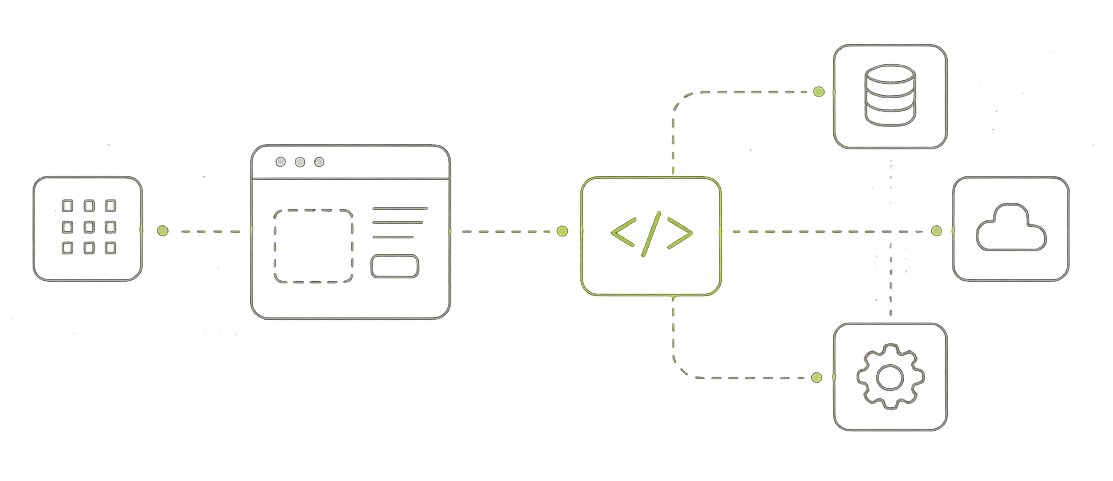
System Architecture
User Interface
Application Logic
Database
APIs
Automation
AI Services
Areas considered
Website or application structure
User journeys and conversion paths
Content and information architecture
Frontend and backend responsibilities
Data and database requirements
APIs, integrations and automation
Security and permissions
Performance, scalability and AI discoverability
What you receive
A defined project scope
Recommended technology stack
Technical architecture
Feature priorities
Integration plan
Project roadmap
Clear next steps
02
STRATEGY & ARCHITECTURE
Creating A Clear Plan Before Development Begins
Once the problem is understood, the next step is deciding exactly what should be built and how the different parts of the system will work together.
This includes defining the project structure, user journeys, technical architecture, integrations, data requirements and the most suitable platforms or technologies.
Planning properly at this stage reduces expensive changes later and gives you confidence that every feature has a clear purpose.
A well-planned project is faster to build, easier to maintain and far less likely to need costly rebuilding later.
03
SYSTEM DESIGN
Designing How The System Looks, Feels And Works
System design is about far more than choosing colours and fonts.
At this stage, I turn the strategy into clear page structures, interfaces, workflows and interactions that make the finished system easy to understand and use.
The design must work for real users, support your business goals and remain practical to develop, maintain and expand.
What is designed
Page and screen layouts
Navigation and user journeys
Forms and conversion points
Dashboards and internal tools
Content structure
Mobile and tablet experiences
Accessibility and error states
Reusable AI-readable interface patterns
Design principles
Clear
Users should immediately understand what to do next.
Consistent
Reusable components make the system easier to use and maintain.
Responsive
Every layout must work properly across desktop, tablet and mobile.
Purposeful
Every element should support a business or user objective.
What you receive
Page or screen structures
Defined user journeys
Interface direction
Responsive design decisions
Reusable component planning
The best design often feels simple because the difficult decisions have already been made behind the scenes.
What may be included
Webflow and responsive frontend development
Backend and database systems
User accounts and permissions
API and third-party integrations
Automated workflows and reporting
Document and report generation
Payment and email integrations
AI-powered features
Analytics and internal tools
Technology
Webflow
Wized
Xano
JavaScript
APIs
Mailgun
Firebase
AI Services
Build principles
Scalable
The system is structured so it can grow without unnecessary rebuilding.
Secure
Access, permissions and data handling are considered from the start.
Integrated
Websites, databases, APIs and services work together as one system.
Maintainable
Clear structure and reusable components make future changes easier.
04
DEVELOPMENT & INTEGRATION
Building The Complete System—Not Just The Visible Pages
This is where the strategy and design become a working digital product.
Depending on the project, I may build the website interface, backend database, business logic, user accounts, integrations, automated workflows and reporting systems.
Because I work across the complete stack, the individual parts are designed to work together rather than being pieced together as disconnected services.
The visible website may be only one part of the system working behind the scenes.
05
LAUNCH & GROWTH
Launching Carefully And Improving With Real Data
A project is not complete simply because the website or system has been published.
Before launch, I test the experience across devices, verify functionality, review integrations and make sure the key user journeys work as expected.
After launch, analytics, user feedback and business results help identify the next improvements. The system can then continue evolving as your business grows.
Before launch
Responsive and browser testing
Form and workflow testing
Integration checks
Performance review
Accessibility review
SEO, metadata and structured data checks
Analytics setup and final content review
After launch
Performance and analytics review
Conversion improvements
New features and automation enhancements
Content improvements
AI visibility improvements
Technical support
Ongoing consultancy
What you receive
A tested and production-ready solution
Launch support
Clear handover or training
Guidance for future improvements
Optional ongoing technical support
Launch is the beginning of real-world learning—not the end of the process.
WORKING WITH EXPERT WEB
What You Can Expect At Every Stage
Clear communication and practical decision-making are part of the process from beginning to end.
Direct Communication
You work directly with me throughout the project—without account managers or unnecessary layers.
Clear Recommendations
I explain the available options and recommend what makes the most sense for your business.
Honest Scope
If a feature is unnecessary, overly complex or unlikely to deliver value, I will tell you.
Business-First Decisions
Technology is chosen to solve the problem—not simply because it is fashionable.
Transparent Progress
You will know what is being worked on, what decisions are required and what happens next.
Long-Term Thinking
Projects are designed to be maintained, improved and expanded as the business grows.
TYPICAL PROJECT JOURNEY
A Flexible Timeline Built Around The Project
Every project has different requirements, but most follow the same broad journey.
01
Enquiry
We discuss the business, goals, challenges and whether the project is a good fit.
02
Discovery
Requirements, opportunities and priorities are explored in detail.
03
Strategy & Scope
The recommended solution, architecture, deliverables and timeline are defined.
04
Design
Pages, interfaces, workflows and responsive layouts are designed.
05
Development
The frontend, backend, integrations and automation are built and tested.
06
Launch
The finished solution is reviewed, deployed and monitored.
07
Growth
Improvements, support and future features continue as needed.
Some projects move through these stages in a few weeks. Larger systems may be delivered in planned phases over several months.
WHY IT WORKS
Built To Reduce Risk And Create Better Results
A clear process does more than keep a project organised. It ensures the right problems are solved, important decisions are made early and every part of the finished system has a purpose.
Business Before Technology
The project begins with your goals and operational needs—not a preferred template or platform.
Strategy Before Development
Planning the system before building it reduces uncertainty, wasted work and expensive changes.
One Connected Solution
Design, development, backend systems, integrations and automation are considered together.
Growth Beyond Launch
The finished solution can continue improving as users, technology and business needs evolve.
Ready to build something that actually scales?
From strategy and architecture to development and automation, every system is built to solve real business problems and scale with your growth.